
Why This Matters More Than Ever in 2026
Summit County is entering one of its highest‑risk wildfire seasons in decades, and the climate data makes that clear. Colorado just experienced the hottest winter in 131 years of recorded history, according to State Climatologist Russ Schumacher. March brought seven days of record‑breaking temperatures, surpassing previous highs that stood for more than 75 years.
Pair that with Summit County’s very low snowfall, low water levels, and rapid early‑season drying, and local officials are expressing serious concern about elevated fire danger across the county.
These conditions create a perfect environment for fast‑moving wildfires — especially in neighborhoods surrounded by dense lodgepole pine, spruce, and fir.
This is the year to take wildfire preparedness seriously.
Protect Your Property: How to Create Wildfire‑Resilient Defensible Space in Summit County
Two of the most effective ways to protect your home are:
- Using fire‑resistant building materials, and
- Creating defensible space around your property
While no single action can guarantee protection, taking proactive steps now can dramatically improve your home’s chances of surviving a wildfire.
What Is Defensible Space?
Defensible space is the intentionally managed area surrounding your home where vegetation and fuels are reduced to slow fire spread and lower fire intensity. Proper defensible space:
- Helps protect your home from approaching wildfire
- Reduces the chance of fire spreading from your home
- Gives firefighters safer access
- Increases the likelihood your home will withstand an ember storm
Red, White & Blue Fire District offers complimentary defensible space evaluations in accordance with the National Firewise Standard. Homeowners can request a free assessment by calling (970) 453‑2474.
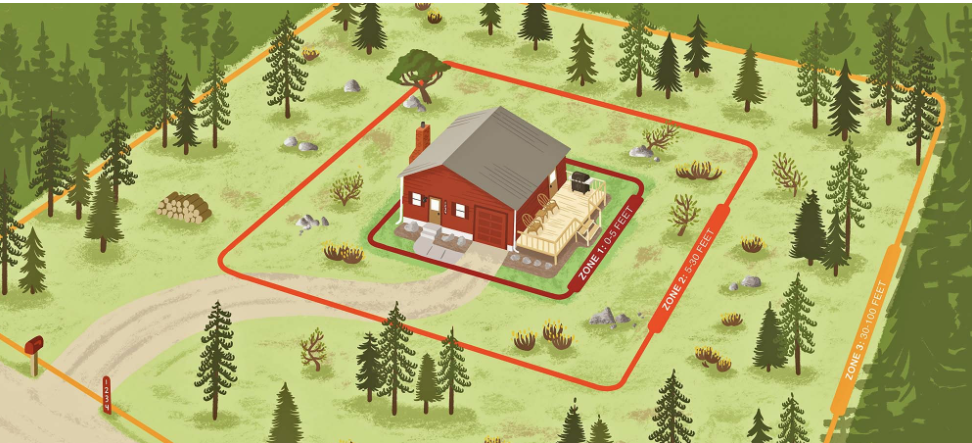
The Three Defensible Space Zones
Wildfire experts divide defensible space into three zones, each with a specific purpose and set of guidelines. Together, they create a layered protection system around your home.
Zone 1: The Immediate Zone (0–5 feet)
Keep this area mostly noncombustible to prevent direct flame contact and give embers a safe place to land and cool.
Landscape
- Noncombustible ground cover — no mulch
- Grasses under 4 inches
- Irrigated planters not touching the structure
- No trees overhanging the roof
- No evergreen trees (pine, spruce, fir)
Structure
- Screen vents with ⅛-inch metal mesh
- Clean gutters and roof valleys annually
- Maintain 6 inches of clearance between the ground/deck and combustible siding
- No firewood storage in this zone
Zone 2: The Intermediate Zone (5–30 feet)
Reduce available fuel so an approaching fire loses intensity before reaching your home.
Landscape
- Maintain grasses at 4–6 inches
- Space trees or clusters 10–12 feet apart (crown spacing)
- Remove ladder fuels
- Prune tree branches 6–10 feet off the ground
- Remove all junipers within 50 feet of structures
- Remove dead, down, or diseased vegetation
- No firewood storage
Zone 3: The Extended Zone (30–100 feet)
Keep fire on the ground and promote long‑term forest health.
This zone may extend beyond your property line. If so, work with neighbors to create a continuous, effective defensible space. Homes on steep slopes may require extending this zone even farther.
Landscape
- Aim for a “park‑like” feel
- Remove tripping hazards and sharp debris
- Reduce ladder fuels and clear ground debris
- Group trees into clumps with 10–15 feet between clusters
- Firewood storage is allowed in this zone
Wildfire Information & Fire Restrictions
More than 80% of wildfires are caused by humans, which means every resident and visitor plays a role in prevention. With Summit County facing extreme dryness, record heat, and low water levels, it’s more important than ever to:
- Stay aware of current fire restrictions
- Follow all local and county guidelines
- Practice safe wildfire prevention in daily activities
This includes responsible behavior regarding camping, campfires, driving, use of outdoor equipment, smoking, shooting, and more.
Stage 1 Fire Restrictions
Stage 1 restrictions prohibit building, maintaining, attending, or using any open fire, including:
- Campfires
- Warming fires
- Bonfires
- Controlled burns
Additional Stage 1 Prohibitions
- Use or sale of fireworks
- Tracer ammunition
- Any projectile with explosive or incendiary material
- Recreational explosives (including exploding targets)
- Disposal of burning objects outdoors (cigarettes, cigars, matches)
Stage 2 Fire Restrictions
Stage 2 restrictions are a total ban on outdoor fires and fire‑related activities.
Under Stage 2, all fire activity is prohibited, including:
- Campfires, bonfires, fire pits
- Charcoal grills
- Chimeneas and portable outdoor fireplaces
- Operating chainsaws
- Fireworks
- Shooting
- Sky lanterns
- Tiki torches
- Burning trash
- Welding
- Torches
The shooting range is CLOSED.
Restrictions apply to private residences as well.
Fire Weather Forecasts & Current Conditions
The Colorado Division of Fire Prevention & Control provides a statewide dashboard with:
- Fire weather forecasts
- Current fire environment conditions
- Wind, humidity, and fuel moisture data
Local agencies — including the Sheriff’s Office, fire districts, USFS, and BLM — will always have the most up‑to‑date restrictions and response information.
For local updates, visit the Summit County Office of Emergency Management.
Emergency Alerts
Both residents and visitors are strongly encouraged to sign up for:
SCAlert
Summit County’s official emergency alert system.
COtrip Alerts
Colorado Department of Transportation’s system for road closures and travel conditions.
These tools provide real‑time updates during wildfire events, evacuations, and severe weather.
Wildfire Evacuation Kit Checklist
Every household should have a ready‑to‑go evacuation kit. Items may vary depending on your needs, but consider including:
- Baby supplies
- Batteries
- Cash
- Clothing, hats, sturdy shoes
- Emergency blankets or sleeping bags
- First aid kit
- Flashlight
- Non‑perishable food (3‑day supply)
- Glasses and contacts
- Keys
- Medication (7‑day supply)
- Personal documents
- Pet supplies
- Phone, laptop, chargers
- Toiletries
- Towels
- Water (3 gallons per person)
- Whistle
- Work gloves
…and more based on your household’s needs.
Being prepared before an evacuation order is issued can save precious time — and lives.
Get a Free Defensible Space Evaluation
Red, White & Blue Fire District offers complimentary property evaluations to help you understand your wildfire risk and create a mitigation plan tailored to your home.
Call: (970) 453‑2474
Taking action today can make all the difference when wildfire conditions arise.
Posted by Jan Leopold April 15, 2026