
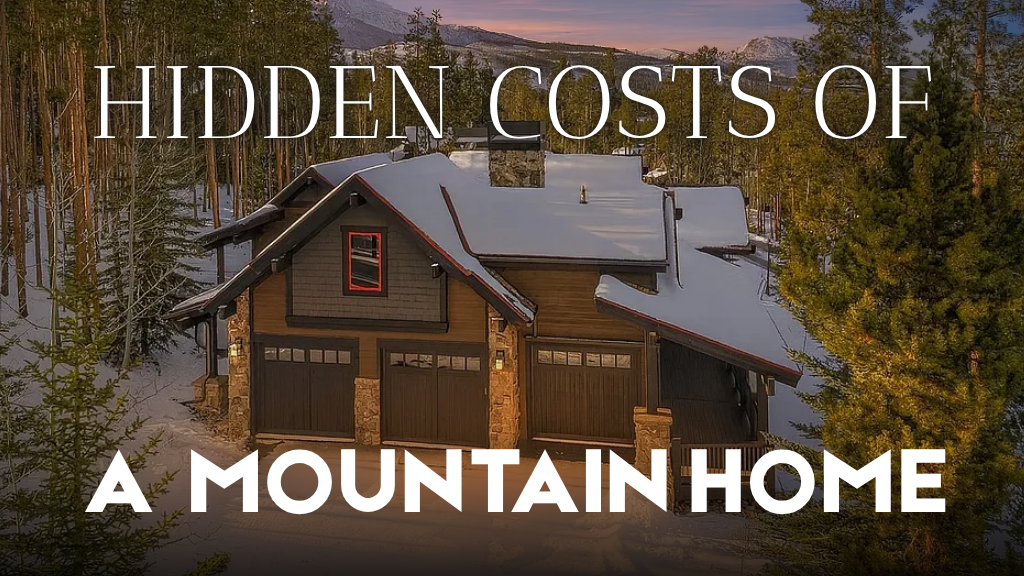
Buying a mountain home in Breckenridge sounds dreamy for a reason. You picture snow falling outside the windows, summer mornings on the deck, friends coming in for long weekends, gear stacked by the door, and that feeling of having your own place in one of Colorado’s most iconic mountain towns.
And honestly, that dream can be absolutely worth it.
But mountain homes come with a different kind of ownership math. The list price is only the beginning. In Breckenridge, buyers also need to think about snow, wildfire mitigation, insurance, utilities, maintenance, short-term rental rules, property taxes, HOA costs, and the reality of caring for a home at 9600 +/- elevation.
That does not mean buying here is a bad idea. It means the smartest buyers go in with eyes wide open.
The Purchase Price Is Only the First Number
Breckenridge is a high-value market, so buyers usually know they are stepping into a serious price point. The average Breckenridge residential home value is around $2.2 million. Buyers may have a little more room to compare than they did in the peak frenzy years, but this is still an expensive mountain market.
The hidden costs show up after that first number. A mortgage estimate may include principal, interest, taxes, and insurance, but mountain ownership can add several extra layers: snow removal, heating, HOA dues, property management, repairs, furniture, cleaning, utilities, rental management, and seasonal service visits.
As a local real estate professional serving Breckenridge, Blue River, and Summit County, Jan Leopold has seen buyers make stronger decisions when they compare the full cost of ownership, not just the list price or monthly payment.
Snow Removal Can Become a Real Line Item
Snow is part of the magic in Breckenridge, but it is also part of the budget. A mountain home may need driveway plowing, walkway and deck shoveling, roof snow management, ice mitigation, and regular winter access planning, especially if you are not in town full-time.
A steep driveway can look charming in July and feel completely different in January. Buyers should pay attention to grade, sun exposure, garage access, parking, turnaround space, and whether snow storage areas make sense.
Mountain roofs work hard too. Heavy snow, freeze-thaw cycles, ice dams, and intense sun exposure can all affect long-term maintenance. During inspections, buyers should ask about roof age, drainage, insulation, gutters, heat tape, and past ice-related issues.
Insurance and Wildfire Mitigation Are Part of Mountain Living
Home insurance has become a bigger conversation across Colorado, especially in mountain and wildfire-prone areas. For Breckenridge buyers, insurance should be reviewed preferably before submitting an offer.
Summit County’s official wildfire programs note that local partnerships have created fuel breaks to protect homes, businesses, and infrastructure. The county also shares that its Chipping Program has helped thousands of residents and property owners take steps to reduce wildfire risk, with more than 11,000 participating households and over 37,000 slash piles chipped.
Wildfire mitigation is not just about peace of mind. It may also matter for insurability, maintenance, and long-term property value. Summit County’s fire districts provide free wildfire mitigation assessments, and the county offers free chipping and slash removal for residents and property owners who create defensible space.
Trees, privacy, and a mountain setting are wonderful, but they come with responsibility.
Utilities and Heating Can Surprise Buyers
A cozy mountain home can use a lot of energy, especially during long winters. Heating costs, water usage, sewer fees, internet service, trash service, and backup systems should all be part of the conversation.
The Town of Breckenridge Water Division says it provides water that meets or exceeds drinking water standards in sufficient quantities for domestic, commercial, irrigation, and fire-protection uses. The town also publishes water rates and billing information, which can help buyers understand ongoing utility obligations before purchasing.
Buyers should also pay close attention to how the home is heated. Radiant heat, electric, forced air, boilers, fireplaces, and supplemental systems can all perform differently. The age and condition of the heating system can affect future repair costs, and a beautiful home that struggles to heat efficiently may become expensive quickly.
For remote workers, internet reliability matters too. Before buying, confirm service options and speed, especially if the home is outside the most central areas or tucked into a quieter mountain setting.
HOA Fees Can Help, But Read the Fine Print
Many Breckenridge condos, townhomes, and some residential communities come with HOA fees. Those fees can be helpful, especially when they cover snow removal, exterior maintenance, common areas, trash, amenities, insurance for certain structures, or management.
But buyers need to know exactly what is included.
A low HOA fee is not always better if the association does not have enough reserves for future repairs. Buyers should review HOA rules, reserve funds, rental restrictions, maintenance responsibilities, special assessment history, and what the fee actually covers.
The better question is not simply, “How much is the HOA?” It is, “What am I getting, and is the association financially prepared?”
Short-Term Rental Rules Can Change the Math
Many buyers want a Breckenridge home they can enjoy personally and rent when they are away. That can work, but the rules need to be understood before buying.
The Town of Breckenridge requires a valid short-term rental license for each short-term rental property. The town defines a short-term rental as a residential dwelling unit, or room within one, available for lease for less than 30 consecutive days. The town also notes that homeowner associations may have their own rules, restrictions, and covenants around short-term rentals.
Buyers should not assume every property can legally or practically work as a short-term rental. Licensing areas, HOA rules, occupancy limits, taxes, cleaning costs, management fees, guest wear and tear, and seasonal demand all affect the numbers.
We’ve helped buyers think through these details because a property that looks like a great rental online may not match the buyer’s actual goals once all rules and costs are reviewed.
Property Taxes and Renovations Need a Closer Look
Property taxes in Summit County depend on where the property is located and which taxing authorities serve that area. The Summit County Assessor explains that counties, towns, schools, and special districts each have their own mill levy, and the total mill levy appears on the annual tax bill from the County Treasurer.
That means two similarly priced homes in different locations may not have identical tax obligations. Buyers should review the current tax bill, assessed value, mill levy, and any special districts tied to the property.
Renovations also deserve early planning. The Town of Breckenridge explains that building permit applications are accepted through its online access portal and must be complete with all requirements at the time of submittal.
Contractor availability, weather windows, delivery access, HOA approvals, design review, snow season, and permitting can all affect project timelines. A “simple update” in another market may take more planning in Breckenridge.
The Smartest Buyers Budget for the Mountain Lifestyle
Buying a mountain home in Breckenridge can absolutely be worth it. The lifestyle is special, the setting is hard to duplicate, and the home can become a gathering place for years of winter trips, summer escapes, and Summit County memories.
But the best buyers do not stop at the purchase price. They look at snow removal, insurance, wildfire mitigation, utilities, HOA fees, rental rules, property taxes, maintenance, and renovation costs before leaping.
That preparation does not take away the excitement. It protects it.
Thinking about buying a mountain home in Breckenridge, Blue River, or Summit County? Contact Jan Leopold to talk through your goals, compare neighborhoods, and understand the real ownership costs before you make your move.
FAQs
What are the biggest hidden costs of buying a mountain home in Breckenridge?
The biggest hidden costs often include snow removal, insurance, wildfire mitigation, utilities, HOA fees, maintenance, property management, short-term rental costs, and future repairs.
Is homeowners insurance more expensive for mountain homes?
Yes, especially in areas with wildfire exposure, difficult access, older roofs, or higher replacement costs. Buyers should get insurance quotes early.
Do Breckenridge vacation homes require short-term rental licenses?
Yes. The Town of Breckenridge requires a valid short-term rental license for each short-term rental property, and HOA rules may also apply.
Should I budget for snow removal?
Yes. Snow removal is an important part of mountain-home ownership, especially for homes with steep driveways, frequent guest use, or second-home owners who are not always in town.
Are HOA fees worth it in Breckenridge?
They can be, especially when they cover snow removal, exterior maintenance, amenities, or management. Buyers should review what the HOA covers, reserve funds, rules, and possible assessments.
About Jan Leopold
Jan Leopold is a licensed real estate professional serving buyers and sellers throughout Breckenridge, Blue River, and Summit County. She specializes in luxury mountain homes, residential sales, relocation, pricing strategies, neighborhood expertise, hyperlocal market insights, and second-home and investment properties.
Jan has earned 110+ five-star Google reviews, 30+ five-star Zillow reviews, and closed 13 transactions in 2025, totaling more than $16.1 million in sales volume. For buyers considering a mountain home in Breckenridge, Jan brings the local perspective needed to understand neighborhoods, ownership costs, rental rules, and long-term mountain lifestyle planning.