
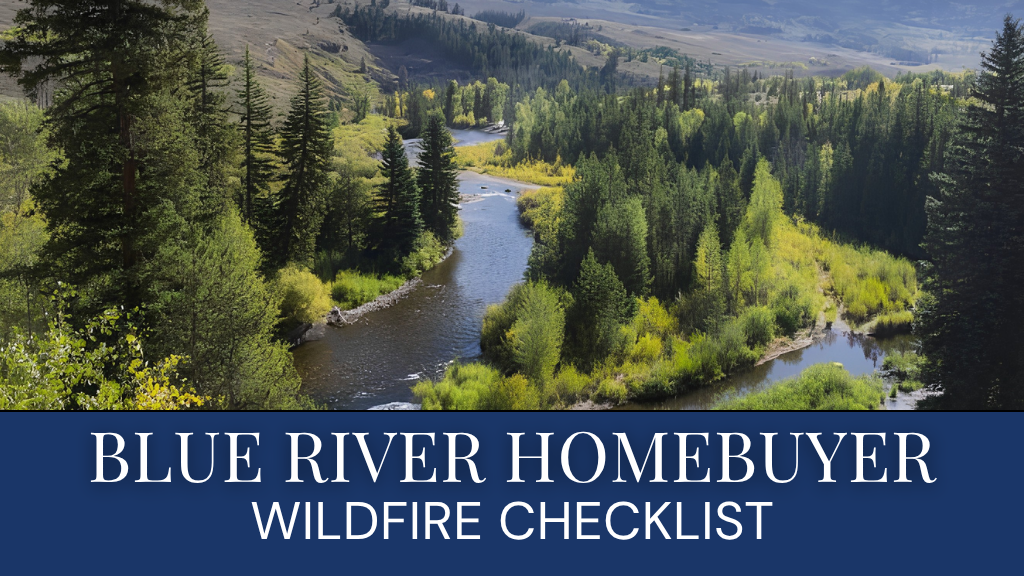
Those tall pines surrounding a Blue River cabin are probably part of what made you click on the listing in the first place. The privacy, mountain setting, and feeling of being tucked into the forest are a huge part of the appeal here. But when you’re buying rather than vacationing, those same surroundings deserve a second look, this time through a wildfire-risk lens.
That doesn’t mean approaching every wooded property with alarm. It means knowing what to inspect before the home becomes yours. Blue River and the surrounding area have already seen major forest-health and wildfire-mitigation projects, including more than 338 acres treated through four Colorado State Forest Service projects near Blue River and Breckenridge. That regional work matters, but the condition of the individual house and lot still matters enormously.
1. Look at the Trees Differently Than You Did in the Listing Photos
A wooded lot can be beautiful without every tree needing to remain exactly where it is. When touring a Blue River property, notice how dense the vegetation is closest to the house. Are branches hanging over the roof? Are dead trees present? Do shrubs, grasses, pine needles, or woody debris create an almost continuous path from the surrounding forest toward the structure? Colorado State Forest Service guidance emphasizes that a home’s wildfire resilience depends on both the building itself and the quality of the surrounding defensible space.
2. Inspect the First Five Feet Around the House
The area immediately next to the structure deserves more attention than buyers often give it. Look for pine needles against siding, leaves trapped underneath stairs, combustible mulch, firewood beside the building, or material stored under decks. Summit Fire & EMS specifically identifies combustible material beneath decks and accumulated roof or gutter debris among concerns evaluated during its residential wildfire inspections.
As a REALTOR® working throughout Summit County, I’ve seen buyers become understandably focused on views, kitchens, and floor plans while the exterior tells an equally important ownership story. In Blue River, walking all the way around the home can be just as useful as touring every room inside.
3. Ask What the Roof, Siding, Decks, and Vents Are Made Of
Wildfire due diligence isn’t only about removing trees. The Colorado State Forest Service notes that embers are a major source of home ignition during wildfires, which makes features such as roofs, decks, vents, siding, and areas where debris accumulates especially worth examining. Summit Fire also points to Class A roofing, noncombustible siding, and more fire-resistant decking among characteristics that can improve a home’s resistance.
Ask about roof age and material, siding type, deck construction, vent screening, and any home-hardening upgrades. An ordinary home inspector can help assess condition, while a wildfire professional can evaluate these features specifically through the wildfire-preparedness lens.
4. Don’t Ignore the Driveway
That long, private mountain driveway may feel charming on showing day. Now picture it when emergency vehicles need to get in, or residents need to get out.
Look at driveway width, grade, turnaround space, overhanging vegetation, address visibility, and how easily vehicles can pass. Summit Fire’s inspection guidance specifically calls for property addresses to be clearly visible for emergency-response personnel, while current Colorado wildfire-preparation guidance encourages residents to identify more than one way out of their neighborhood where possible.
5. Zoom Out and Look Beyond the Property Lines
A beautifully mitigated half-acre does not exist in isolation. Notice the density and health of the surrounding forest, neighboring lots, open or undeveloped areas nearby, slopes, and vegetation leading toward the property. Since 2021, the Colorado State Forest Service and regional partners have carried out landscape-scale projects around Blue River and Breckenridge specifically to improve forest health and reduce wildfire risk. The Blue River East, Blue River West, White Cloud, and Spruce Creek projects collectively treated more than 338 acres and were designed to reduce risk to roughly 3,000 homes.
6. Use Wildfire Maps as a Starting Point, Not a Pass-or-Fail Test
Pulling up a wildfire-risk map before making an offer is smart. Treating the map as a substitute for inspecting the property is not. The Colorado State Forest Service’s Wildland-Urban Interface map is explicitly described as an educational tool providing a general neighborhood-level assessment. CSFS tells property owners to consult a wildfire-mitigation professional for an assessment specific to the individual home and property because numerous factors influence actual risk.
7. Get the Insurance Quote Before You Get Emotionally Committed
Wildfire preparedness can affect more than safety. It can affect the ownership budget. Colorado wildfire officials recommend reviewing insurance coverage carefully, including replacement-cost versus actual-cash-value provisions and additional living expenses. For a buyer, go one step earlier: contact insurance professionals about the specific property during due diligence and determine whether coverage is available at a cost you are comfortable carrying.
Don’t assume that the seller’s current premium will become yours, and don’t assume two similarly priced Blue River homes will produce identical insurance quotes. Distance from a fire station, property characteristics, and individual insurer underwriting can all significantly affect coverage availability and premiums.
8. Find Out What Mitigation Has Already Been Done
A property where the seller has consistently managed trees, vegetation, roof debris, and defensible space may present a very different starting point from one that has received little attention for years.
Ask whether the home has had a wildfire assessment, when trees were last thinned, whether dead or diseased trees were removed, whether neighborhood mitigation has occurred, and whether an HOA has ongoing wildfire requirements.
Summit Fire & EMS currently offers free, nonbinding on-site wildfire-preparation assessments to residents and property owners. These visits review landscaping, ember exposure, and other property-specific preparedness issues.
9. Ask Whether Future Remodeling Could Trigger New Wildfire Standards
Here’s a 2026 detail worth knowing if you’re buying with renovation plans. Summit Fire & EMS reports that Colorado’s 2025 Wildfire Resiliency Code became enforceable statewide on July 1, 2026, within mapped Wildland-Urban Interface areas. It is not retroactive to every existing home, but it can apply to new construction and certain larger alterations, including additions of 500 square feet or more or replacement of at least 25% of exterior roofing or siding. So when that Blue River listing comes with dreams of a big addition or exterior transformation, add wildfire-code requirements to the renovation conversation before assuming your budget is complete.
10. When the Property Feels Complicated, Bring in a Wildfire Professional
This is the most important item on the checklist because buyers don’t need to diagnose every wildfire issue themselves. A general inspection, insurance quote, wildfire-risk map, seller disclosures, and your own observations all provide useful pieces of information. But for heavily forested lots, steep terrain, questionable access, dense vegetation, or properties where significant mitigation may be needed, request an assessment from a qualified wildfire professional. The Colorado State Forest Service specifically recommends property-level professional assessment rather than relying solely on broad risk mapping, and Summit Fire offers local assessment resources for property owners.
The Forest Can Still Be the Reason You Love the House
Wildfire due diligence isn’t about talking yourself out of living among the trees. It’s about understanding the risks and responsibilities that come with mountain living before you buy. A Blue River home with thoughtful mitigation, appropriate construction features, workable emergency access, reasonable insurance, and a manageable long-term maintenance plan may feel very different from another property whose wildfire-related needs could require substantial work after closing.
Thinking about buying a mountain home in Blue River? Contact Jan Leopold before you make the property’s wildfire profile an afterthought. Jan can help you compare homes through a local real estate lens and identify the questions worth investigating during due diligence, while inspectors, insurance professionals, Summit Fire & EMS, and qualified wildfire specialists can help evaluate the technical risks. The goal isn’t to find a property with zero wildfire risk. It’s to understand the property you’re buying well enough to make a confident decision.
FAQs: Wildfire Questions Blue River Buyers Should Ask Before Closing
Is Blue River, Colorado, considered a wildfire-risk area?
Blue River sits within Colorado’s mountain forest environment and the broader wildland-urban interface context. Wildfire exposure varies by property, vegetation, terrain, structure, and surrounding conditions, so buyers should look beyond a townwide label and evaluate the specific home.
Should I avoid buying a home surrounded by trees?
Not automatically. Tree density, spacing, condition, distance from structures, slope, and overall defensible space matter more than simply counting how many trees are present. A qualified wildfire professional can help assess the specific property.
Can wildfire mitigation lower my homeowners insurance?
Mitigation may be relevant to an insurer’s assessment, but buyers should never assume that specific work guarantees coverage or a particular premium. Request actual quotes for the property and ask the insurer how mitigation characteristics are considered.
Who can inspect a Blue River home specifically for wildfire preparedness?
Summit Fire & EMS offers free, nonbinding wildfire-preparation and property assessments, and the Colorado State Forest Service recommends working with qualified local wildfire-mitigation professionals for property-specific evaluations.
Does a wildfire-risk map tell me whether a house is safe?
No. CSFS says its map provides general neighborhood-level context and specifically recommends a professional property-specific assessment. Construction, vegetation, topography, access, and many other factors can differ even between nearby homes.
About Jan Leopold
Jan Leopold is a top-performing REALTOR® with RE/MAX Properties of the Summit, helping buyers and sellers navigate Breckenridge, Blue River, and communities throughout Summit County. RealTrends Verified reports $15.78 million in 2025 sales volume across 10 transaction sides, while Jan’s professional profile reports more than 400 career transactions and $220 million in career sold volume.
That depth of mountain-market experience becomes especially useful when a property needs to be evaluated beyond bedrooms and views. For Blue River buyers, Jan brings the hyperlocal perspective needed to recognize when questions about lot configuration, insurance, mitigation history, access, future improvements, and long-term ownership deserve a closer look before moving forward.